
Soft fabric alone doesn’t prove a baby garment is made from organic cotton. Check the garment’s fabric details for an explicit organic-cotton claim. Comfortable baby clothes should also feel gentle and allow easy movement.
Parents often look for soft, breathable layers, especially when their baby’s skin seems easily irritated. But fabric is only one part of comfort. A good fit leaves room to move without bunching or making changes harder.
This guide explains how to distinguish organic cotton from a general softness claim, what to consider for sensitive skin, and how to use baby clothing sizes for a comfortable fit. You’ll also learn what makes rompers, sleepsuits and footed pyjamas practical choices for everyday dressing and rest. With simple checks for fabric feel, openings and room to grow, choosing outfits can feel less like guesswork and more like a calm part of caring for your little one.
Key Takeaways
- Learn what to look for in fabric details when you want to identify organic cotton and understand the role of GOTS certification.
- Use simple fit checks to choose baby clothes that feel gentle and leave room for comfortable movement.
- Compare rompers, sleepsuits and footed pyjamas to find styles that suit everyday dressing and rest.
- Explore practical outfit choices by considering how easy each garment is to put on, take off and pair with other pieces.
Are your clothes suitable for sensitive skin?
For newborns and infants, start with the fabric that rests against their skin. Check the garment label for its fibre content, then feel the inside for a smooth finish. A cotton bodysuit beneath a loose top makes it easier to notice whether seams or labels rub. Softness alone doesn’t prove that a garment is organic cotton or suitable for every baby. Notice how the material feels after washing, too.
Newborn clothing and layette sets can make early outfit changes easier when each piece has a clear purpose. A set might include bodysuits, tops and bottoms for layering. Before dressing your baby, check that each item fits comfortably and allows gentle movement. Avoid clothing that pulls at the shoulders or presses tightly around the waist. A top, for example, should sit smoothly when your baby stretches.
What safety features should I check when buying baby clothes? Look for secure fastenings, smooth seams and no loose parts, and check that openings make dressing straightforward. Feel inside for scratchy trims or labels, and make sure closures don’t press against the skin. These checks can help you spot details that might rub or catch during dressing and play.
How should I wash baby clothes to keep them soft and safe for sensitive skin? Read the care label first, then use a gentle wash cycle and rinse away detergent residue. Baby clothes can generally be washed at temperatures up to 60°C, equivalent to 140°F, subject to the garment’s care instructions. Dry each item fully before storing it, and feel the fabric for stiffness before dressing your baby.
As a practical check, wash one new outfit before using it. After it dries, feel the fabric, inspect the seams around the neck and legs, and see whether the fastenings still close smoothly. If a label feels scratchy, keep it away from direct skin contact or choose a garment with a smoother inside. These checks can help you choose comfortable baby clothes for newborns and infants, and notice which textures your baby seems to tolerate in everyday wear.
Are your baby clothes made from organic cotton?
Check the fibre label before choosing a cotton garment. “Cotton” names the fibre, while “organic cotton” describes how it was produced. A soft feel alone can’t tell you which one you’re buying. Look for the material wording on the label or product details instead of relying on the colour, pattern or a general claim about softness.
GOTS stands for Global Organic Textile Standard. It is a certification standard for textiles made with organic fibres. If certification matters to you, look for the GOTS name or mark and certification details in the product information. A general “organic” claim isn’t the same as a named certification. Read the wording carefully to see whether it applies to the whole garment or only one material.
For cotton baby bodysuits and onesies, check both the fibre information and the construction. A bodysuit sits close to the body, so feel the inside and inspect the seams around the neck, legs and fastening area. Choose a fit that lets your baby stretch and kick without the fabric pulling. Organic cotton describes the fibre claim; it doesn’t automatically tell you how a garment feels or fits.
On hot days, lightweight cotton is a practical fabric to consider. Choose a breathable-feeling garment with a relaxed fit, so it doesn’t cling tightly. For a simple everyday layer, browse baby bodysuits, then review the fabric details for each item.
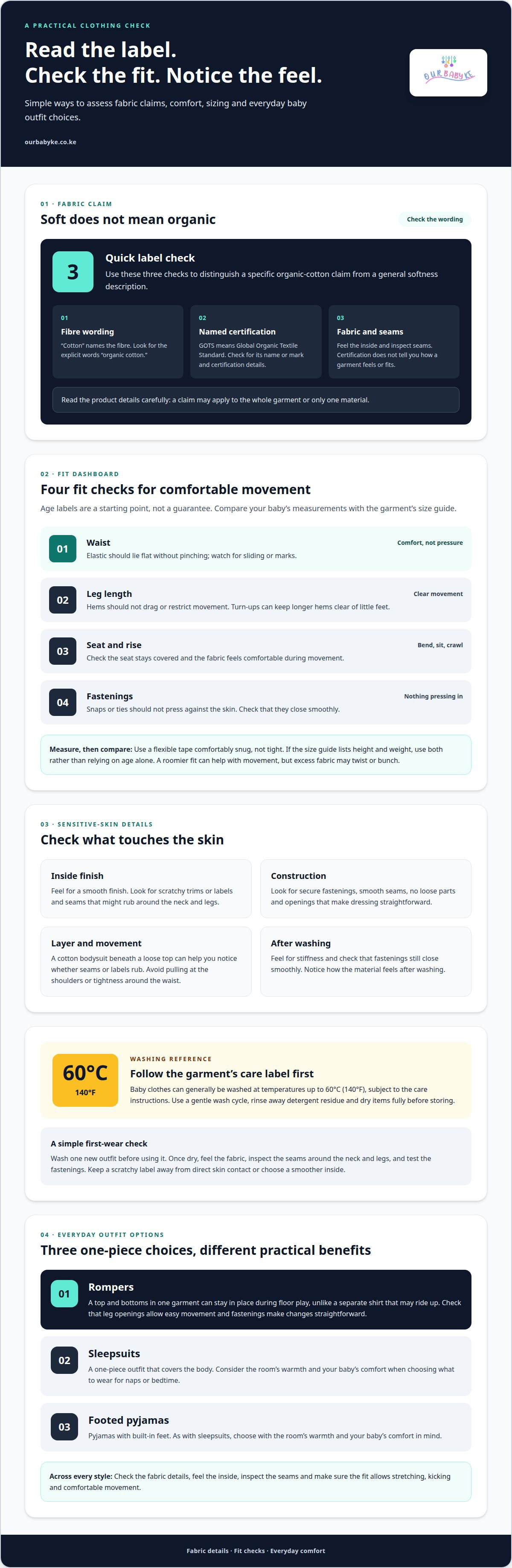
Use a quick label check: note the fibre wording, look for named certification details, then assess the fabric and seams. This helps distinguish a specific organic-cotton claim from a general description. It also helps you choose a bodysuit that feels comfortable during your baby’s daily movements.
Baby clothing sizes
Age labels are a starting point, not a guarantee of fit. Babies grow at different rates, so compare the garment with your baby’s current shape. Check the waist, rise and leg openings on bottoms. The waistband should stay in place without digging in, and the fabric should allow bending, kicking and crawling without pulling across the knees.
Use a flexible measuring tape to note your baby’s height and body measurements. Keep the tape comfortably snug, not tight. Compare the measurements with the size guide for the garment you’re considering. If the guide lists height and weight, use both rather than relying on age alone. A baby with longer legs may need a different fit from another baby of a similar age.
Before keeping a new pair of bottoms, check how they move. With your baby wearing them, look for bunching at the knees while crawling. Check that the seat stays comfortably covered when your baby bends or sits. Watch for a waistband that slides down or leaves marks. These signs can show whether the cut suits your baby’s shape.
- Waist: Check that the elastic lies flat and doesn’t pinch.
- Leg length: Look for hems that don’t drag or restrict movement.
- Seat and rise: Make sure the fabric stays comfortable during crawling.
- Fastenings: Check that snaps or ties don’t press against the skin.
Between sizes? Compare the garment’s cut with your baby’s measurements and daily routine. A roomier fit may work for a long day of crawling, but excess fabric can twist or bunch. Turn-ups, for example, can keep longer hems clear of little feet. Follow the garment’s care instructions and recheck the fit after washing. A good fit supports movement and makes dressing simpler.
Baby rompers, sleepsuits and footed pyjamas
A romper combines a top and bottoms in one garment. Its one-piece shape can stay in place during floor play, unlike a separate shirt that may ride up. Check that the leg openings allow easy movement as your baby crawls. Simple fastenings can also make quick changes less fiddly.
Sleepsuits cover the body as one outfit, while footed pyjamas have built-in feet. For daytime naps or bedtime, choose based on the room’s warmth and your baby’s comfort. In a warm room, a lighter layer may feel more comfortable than several pieces. In cooler conditions, a sleepsuit can provide more coverage without separate trousers.
Fastenings affect how easy a garment is to use every day. Snaps along the legs can make nappy changes easier, while a front opening can help with dressing. Before choosing, open and close the garment and check that the fabric doesn’t pull. Inspect the crotch and knees, where crawling and bending can stretch the material.
- Rompers: Consider these for play when you want a joined top-and-bottom outfit.
- Sleepsuits: Choose one when you want a single garment for resting.
- Footed pyjamas: Look for them when you prefer covered feet in sleepwear.
For active crawlers, try the garment during a familiar movement, such as reaching for a toy. Notice whether the fabric twists or gathers around the knees, and check that footed ends don’t tug when your baby stretches. If your child dislikes covered feet, a romper or sleepsuit without built-in feet may work better during the day.
Think about your daily routine, too. A garment with accessible fastenings may simplify changes, while a one-piece outfit can reduce separate pieces to manage. Explore baby bottoms for mix-and-match outfits that suit active little ones.
Our Baby Ke: Bottoms
Our Baby Ke offers bottoms for families putting together everyday outfits for active crawlers. Pair them with a bodysuit or top for a simple outfit, or choose pants as a separate lower layer. Coordinated sets are another easy-to-pair option.
As you browse, use the fit checks in this guide: compare each garment with your baby’s measurements, then look for room to bend and crawl. Consider how each piece works with the clothes your little one already wears. These practical steps can help you choose comfortable baby clothes for daily movement, rather than relying on age labels alone.
Visit ourbabyke.co.ke to explore the available bottoms, pants, bodysuits and sets.
Make the next outfit choice with care
Your baby’s needs can change as they grow and move through the day. Let comfort guide each choice, then notice how the outfit feels during play, rest and changes. Keep the routine simple: consider the day’s activities, choose suitable pieces and watch how your baby moves in each garment. Comfortable baby clothes can then become part of an easy, thoughtful dressing routine.
Our Baby Ke offers bottoms, bodysuits and pants for practical everyday outfits. Choose pieces that suit your family’s routine, whether you’re putting together a play outfit or a simple layer.
Contact Our Baby Ke for help as you choose your baby’s next outfit. Take it one outfit at a time, and enjoy finding what feels right for your little one.
Frequently Asked Questions
How should baby clothes fit for comfort and safe movement?
Choose clothes that stay in place without pressing on your baby’s body. During a nappy change, check whether the garment shifts easily when your baby lifts their legs. For a crawling baby, watch how the fabric moves around the knees and hips during floor play. A garment that twists or rides up may distract your little one, so try another cut or shape.
What types of baby clothes are best for newborns and older babies?
Newborns often need simple layers that make dressing and nappy changes manageable. A bodysuit with an easy opening can work as a base layer, with a top or pants added as needed. Older babies may spend more time sitting, rolling or crawling, so separate tops and bottoms can make outfit changes more flexible. Choose pieces to suit your routine and your baby’s movements.
Which baby clothing fabrics are gentle on sensitive skin and eczema?
Choose fabric that feels smooth against the skin, and inspect the inside for rough seams, tags or trims. A soft cotton garment can be a practical option, but fibre content alone doesn’t determine how an item feels. Check the finished fabric and fit, especially where waistbands and leg openings touch. Clothing choices can support day-to-day comfort, but they don’t treat eczema.
How many baby clothes does a newborn need?
Plan how many clothes you need around how often you can wash them and how quickly your newborn needs outfit changes. Start with a small rotation of bodysuits, tops and bottoms, then add pieces as you learn your baby’s routine. Spit-ups, nappy leaks and drying time can affect how much you reach for. Keeping a clean spare outfit within easy reach can make outings simpler.
How do I choose baby clothes for Kenya’s different climates and seasons?
For hot days, consider lightweight cotton with a breathable feel and a relaxed fit. In cooler conditions, a sleepsuit can provide more coverage. Choose layers based on the room’s warmth and your baby’s comfort.
